 Image 1 of 2
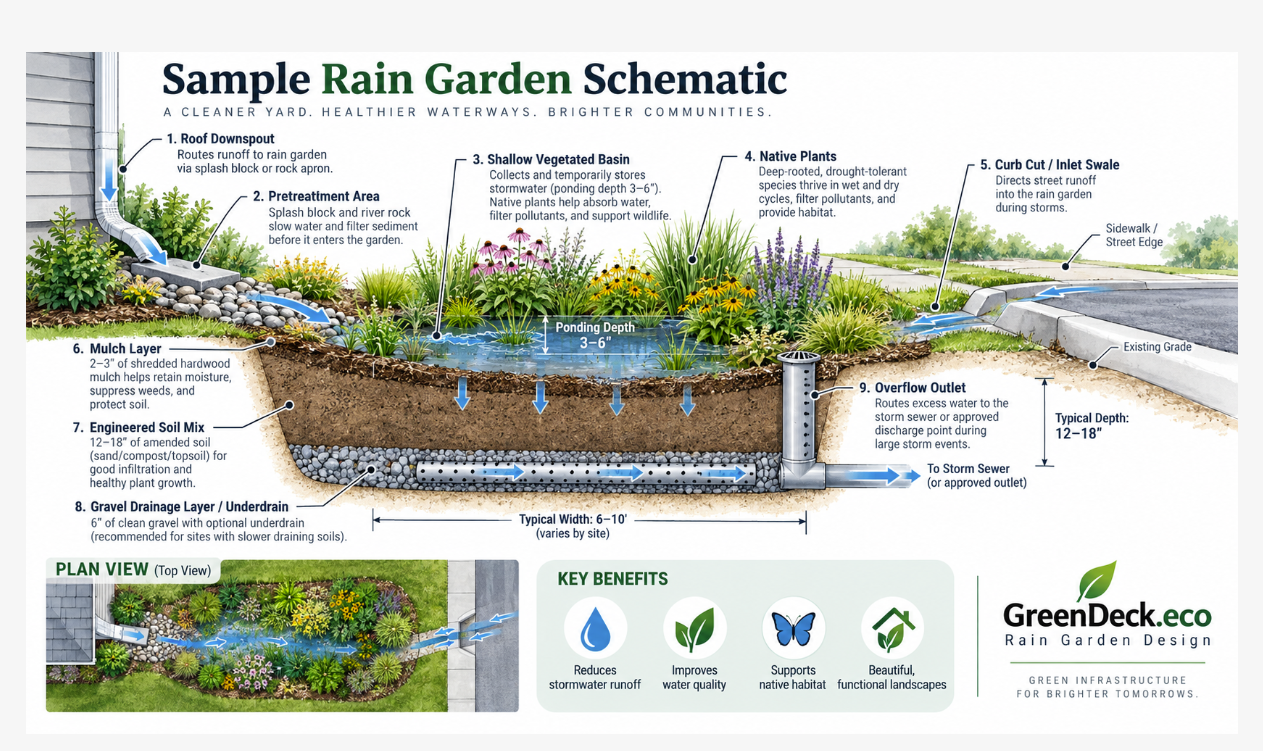 Image 2 of 2
Edible Pollinator Garden Designs
Product: Customized Edible Pollinator Rain Garden — Complete Design Pack
Overview A turnkey design for a low-maintenance rain garden that captures and infiltrates stormwater, supports pollinators, and produces edible crops. Tailored to a specific site (yard, community garden, schoolyard, rooftop), the design balances hydrology, habitat, and food production while using native and climate-resilient plants. Delivered as a downloadable package with installation and maintenance guidance.
What you receive
Site Assessment Worksheet (fillable PDF)
Site dimensions, slope, soil type, drainage patterns
Sun/shade map and microclimates
Existing vegetation, utilities, and constraints
Rainfall/runoff estimates and target capture volume
Desired harvest goals (types/amounts of edible yield)
Custom Planting Plan (vector-ready drawing + plant list)
Scaled plan showing rain garden footprint, swales/berms, overflow, access paths, and compost/harvest zones
Zoning by moisture gradient: inlet zone, wet center, moist margins, dry berm upland
Annotated plant palette (scientific/common names, edible part, bloom time, pollinator value, seasonality)
Quantities and spacing for 50, 100, 250 sq ft sizes (can be adjusted)
Alternatives for three climate/USDA zone groups (cool-temperate; warm-temperate; Mediterranean/dry)
Hydrology & Soil Amendment Plan
Simple sizing calculator to determine basin volume and footprint to capture a specified storm depth (e.g., 1"–2" events)
Inlet design for sheet flow or concentrated inflow, staging/pretreatment (gravel forebay, native mulch trap)
Soil profile recommendations and amendment schedule (percent organic matter target, sand/compost ratios)
Underdrain and overflow specifications when infiltration limits require them
Edible & Pollinator Plant Palette
Combined list of native/regionally appropriate species prioritized for:
Pollinator nectar/pollen resources across seasons
Edible yield (herbs, berries, perennial vegetables, fruiting shrubs)
Low toxicity for human use and safe edible parts
Example palette highlights (general — final palette adjusted to site):
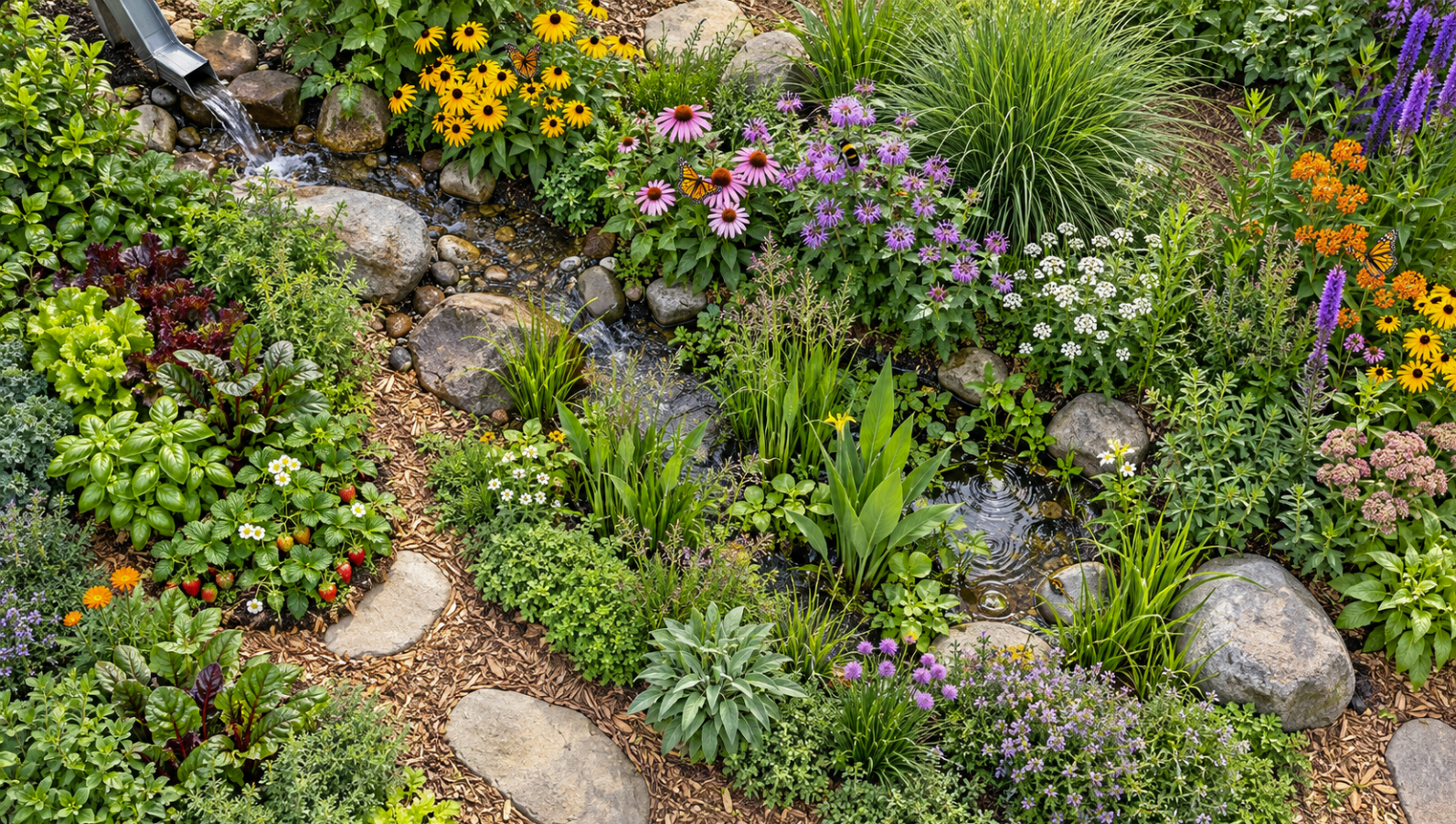
Wet center: Blueberry (Vaccinium spp.) — edible fruit, spring flowers for bees
Moist margins: Serviceberry/Juneberry (Amelanchier) — edible fruit, pollinator-friendly
Moist/well-drained: Elderberry (Sambucus canadensis) — edible berries for cooked use, high pollinator value
Perennial herbs: Bee balm (Monarda fistulosa) — edible leaves/tea, attracts bees and hummingbirds
Groundcover/edible: Wild strawberries (Fragaria vesca) — edible groundcover, pollinator-friendly
Seasonal annuals for added yield: Borage (Borago officinalis) — edible flowers, strong pollinator attractor
Structural species: Native sedges and rushes for infiltration edge stability
Planting & Establishment Guide
Timing and step-by-step planting sequence
Mulch selection and application rates (pollinator-safe mulch guidance)
Watering schedule for establishment (first 2–3 seasons)
Protective measures for young edibles (temporary fencing, netting tips)
Succession and pruning guidance for maximizing flowers and harvest
Maintenance Plan (year-by-year, 5-year horizon)
Seasonal tasks (spring clean-up, summer thinning, fall mulch refresh, winter cutback)
Pollinator-forward weed management (identify species to retain vs remove)
Harvest calendar and gentle processing/food-safety notes (e.g., safe preparation for elderberries)
Soil health monitoring and compost/topdressing schedule
Pollinator monitoring checklist and simple citizen-science data sheet template
Construction & Materials List
Excavation volumes, gravel, soil mix, plants, liners (if needed), underdrain pipe, check dam materials
Tools and equipment list (rakes, tampers, shovels, compost spreaders)
Estimated labor hours for DIY and contractor-assisted installation
Budget estimate ranges (DIY vs contractor) with cost drivers identified
Educational & Community Add-Ons (optional)
Planting labels focusing on pollinators, edible species, and water benefits
Optional school curriculum outline for K–12: planting day, pollinator life cycles, water health, protection and cycle lessons w/ volunteer event checklist for planting/maintenance days
Customization process
You complete the Site Assessment Worksheet and answer a short questionnaire (site photos recommended).
We produce a Draft Design within 7 business days: plan drawing, plant palette tailored to
Product: Customized Edible Pollinator Rain Garden — Complete Design Pack
Overview A turnkey design for a low-maintenance rain garden that captures and infiltrates stormwater, supports pollinators, and produces edible crops. Tailored to a specific site (yard, community garden, schoolyard, rooftop), the design balances hydrology, habitat, and food production while using native and climate-resilient plants. Delivered as a downloadable package with installation and maintenance guidance.
What you receive
Site Assessment Worksheet (fillable PDF)
Site dimensions, slope, soil type, drainage patterns
Sun/shade map and microclimates
Existing vegetation, utilities, and constraints
Rainfall/runoff estimates and target capture volume
Desired harvest goals (types/amounts of edible yield)
Custom Planting Plan (vector-ready drawing + plant list)
Scaled plan showing rain garden footprint, swales/berms, overflow, access paths, and compost/harvest zones
Zoning by moisture gradient: inlet zone, wet center, moist margins, dry berm upland
Annotated plant palette (scientific/common names, edible part, bloom time, pollinator value, seasonality)
Quantities and spacing for 50, 100, 250 sq ft sizes (can be adjusted)
Alternatives for three climate/USDA zone groups (cool-temperate; warm-temperate; Mediterranean/dry)
Hydrology & Soil Amendment Plan
Simple sizing calculator to determine basin volume and footprint to capture a specified storm depth (e.g., 1"–2" events)
Inlet design for sheet flow or concentrated inflow, staging/pretreatment (gravel forebay, native mulch trap)
Soil profile recommendations and amendment schedule (percent organic matter target, sand/compost ratios)
Underdrain and overflow specifications when infiltration limits require them
Edible & Pollinator Plant Palette
Combined list of native/regionally appropriate species prioritized for:
Pollinator nectar/pollen resources across seasons
Edible yield (herbs, berries, perennial vegetables, fruiting shrubs)
Low toxicity for human use and safe edible parts
Example palette highlights (general — final palette adjusted to site):
Wet center: Blueberry (Vaccinium spp.) — edible fruit, spring flowers for bees
Moist margins: Serviceberry/Juneberry (Amelanchier) — edible fruit, pollinator-friendly
Moist/well-drained: Elderberry (Sambucus canadensis) — edible berries for cooked use, high pollinator value
Perennial herbs: Bee balm (Monarda fistulosa) — edible leaves/tea, attracts bees and hummingbirds
Groundcover/edible: Wild strawberries (Fragaria vesca) — edible groundcover, pollinator-friendly
Seasonal annuals for added yield: Borage (Borago officinalis) — edible flowers, strong pollinator attractor
Structural species: Native sedges and rushes for infiltration edge stability
Planting & Establishment Guide
Timing and step-by-step planting sequence
Mulch selection and application rates (pollinator-safe mulch guidance)
Watering schedule for establishment (first 2–3 seasons)
Protective measures for young edibles (temporary fencing, netting tips)
Succession and pruning guidance for maximizing flowers and harvest
Maintenance Plan (year-by-year, 5-year horizon)
Seasonal tasks (spring clean-up, summer thinning, fall mulch refresh, winter cutback)
Pollinator-forward weed management (identify species to retain vs remove)
Harvest calendar and gentle processing/food-safety notes (e.g., safe preparation for elderberries)
Soil health monitoring and compost/topdressing schedule
Pollinator monitoring checklist and simple citizen-science data sheet template
Construction & Materials List
Excavation volumes, gravel, soil mix, plants, liners (if needed), underdrain pipe, check dam materials
Tools and equipment list (rakes, tampers, shovels, compost spreaders)
Estimated labor hours for DIY and contractor-assisted installation
Budget estimate ranges (DIY vs contractor) with cost drivers identified
Educational & Community Add-Ons (optional)
Planting labels focusing on pollinators, edible species, and water benefits
Optional school curriculum outline for K–12: planting day, pollinator life cycles, water health, protection and cycle lessons w/ volunteer event checklist for planting/maintenance days
Customization process
You complete the Site Assessment Worksheet and answer a short questionnaire (site photos recommended).
We produce a Draft Design within 7 business days: plan drawing, plant palette tailored to